
Summarise this article with:
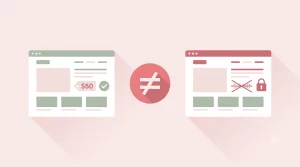
When we audited 314 clinic appearances across ChatGPT, Perplexity and Google AI Overviews earlier this year, one pattern kept surfacing that we didn’t discuss. The treatment pages that the AI platforms recommended tended to show their prices on the page. The pages that didn’t tended to hide them behind an enquiry. We mentioned this in the first article (saying that we hadn’t isolated pricing as a variable), added a one-line warning that ASA rules on price advertising in aesthetics are strict, and moved on to the things we had measured.
This article is about the thing we moved on from: how to optimise pricing in UK aesthetics for both visibility and compliance with strict CAP and ASA regulations.
The single clearest signal you can give an AI platform about a treatment, the price, is a signal that UK law forbids you from publishing for your single most-searched treatment. Put anti-wrinkle injection pricing on your page, and you have an advertising breach that the Advertising Standards Authority (ASA) and its sister body, the Committee of Advertising Practice (CAP), working with the Medicines and Healthcare products Regulatory Agency (MHRA), are actively monitoring for, using automated tools, across roughly 130,000 businesses in this sector.
So there is a genuine tension here, and almost nobody in aesthetics marketing is talking about it. Here is how the paradox works, and how to build a pricing setup that works for both the algorithm and the regulator.
A Quick Note On This Article
In the March audit, we noticed that the pages AI platforms recommended tended to show their prices, and the ones they ignored tended not to, but we didn’t isolate pricing as a clean variable and run the correlation, so we won’t put a number on it.. What follows instead rests on the mechanism by which these platforms read a page, on Google’s own published guidance, and on that observed pattern.
It’s also worth saying plainly that this touches on advertising law and medicines regulation, and we’re a growth agency, not a law firm. The rules on prescription-only medicines are strict and getting them wrong has real consequences, so read this as a prompt to look hard at your own site rather than as legal advice.
Why AI Search Rewards Pricing
To understand, start with how a patient actually uses these AI platforms. When someone asks ChatGPT or Perplexity about a treatment, “how much does it cost” is one of the first questions they ask, either directly or as a follow-up. Price is not a detail to them. It’s often the deciding factor in whether they enquire at all.
AI platforms are built to answer that question. They work by extracting specific, structured facts from the pages they trust and assembling them into a direct response. A page that already states “microneedling, from £120 per session” gives the model a clean, quotable fact it can surface immediately. A page that says “contact us for pricing” gives it nothing to extract, and forces it either to skip your clinic or to pull a price from somewhere else, a competitor, a directory, an old cached figure. Either way, you have handed the answer to someone else.
This is consistent with what Google set out in its May 2026 AI Optimization Guide, which we have written about before. The guide’s central test for whether a page deserves to be surfaced in AI Overviews and AI Mode is, in plain terms, whether the page contains substantive, specific information that genuinely answers the query, rather than commodity content that could have been written by anyone. A treatment page that answers the real questions a patient has, including cost, is doing exactly what the guide rewards. A page that treats price as a secret to be extracted through an enquiry form is doing the opposite.
And it lines up with the observation from our own audit. The pages we graded as Strong, the ones that consistently won across all three AI platforms, were overwhelmingly the ones that read like a proper patient resource: what the treatment is, who it’s for, what to expect, aftercare, realistic outcomes, and, more often than not, what it costs. The thin pages that lost tended to be a price list with a CTA kind of page, or worse, pages that didn’t mention pricing at all. Transparency was part of the core of a page that AI trusted.
So the instinct is simple: put your prices on the page, clearly, in text, structured so a machine can read them. For most of your treatment menu, that’s the right strategy. But, for one part of the menu, it’s actually illegal.
The Catch: Your Flagship Injectable Treatment Is a Prescription-Only Medicine
Botulinum toxin, sold as Botox, Azzalure, Bocouture, Dysport, Vistabel and other brands, is a prescription-only medicine (POM). And under UK law, prescription-only medicines can’t be advertised to the public in any media, full stop. This is set out in the CAP Code (rule 12.12) and enforced alongside the MHRA.
The scope of that ban is much wider than most clinic owners realise, and this is the part that trips people up. It’s not simply “don’t put a price next to the word botox.” The ASA has been explicit that the ban covers:
- The brand names (Botox, Azzalure, and so on) and the generic term “botulinum toxin”
- Indirect references, including terms like “anti-wrinkle injections” or “wrinkle-relaxing injections”, when what you are actually offering is the toxin. The regulator’s position is that readers understand these to mean the same thing, so an indirect reference breaches the rules just as a direct one does
- Images of the product, and hashtags such as #botox
- Prices shown next to any of the above, and before-and-after photos of the treatment
- Offering the treatment as a competition prize or as part of a package
- Even describing the medical conditions it can treat, such as hyperhidrosis, in a promotional context
In other words, the exact move that AI search rewards, naming the treatment and stating its price on the page, is the specific thing the law prohibits for this treatment. You can’t put “anti-wrinkle injections, from £150” on your site. You can’t put it next to a before-and-after. You can’t encourage people to choose based on price.
And this isn’t a rule that nobody enforces. The current crackdown started with social media, and that’s still where most of it is, alongside paid advertising. CAP and the MHRA issued a joint enforcement notice targeting exactly this behaviour, and CAP uses automated monitoring technology to find non-compliant ads and report them to the platforms, with a stated reach across the tens of thousands of businesses in the sector. Your clinic’s site is further down that list, but it isn’t outside the rules. It still counts as advertising, so the same principles apply even if it’s less actively policed than, say, a sponsored post.
For medically qualified injectors, there’s a second layer to factor. The GMC’s updated cosmetic interventions guidance, in force since December 2024, expects doctors to market responsibly, and the NMC holds nurses to comparable standards. A breach here isn’t just an AI-visibility problem. It’s a regulatory one, and for a doctor or nurse prescriber, it carries a professional dimension too, with a registration attached.
One important extension, because it’s now relevant to modern clinics. The same logic applies to the weight-loss injectables many clinics now offer (semaglutide, tirzepatide, sold as Wegovy, Mounjaro and others) and to prescription skincare like tretinoin. These are also POMs. CAP has been taking action against “skinny pen” and “skinny jab” style promotions on precisely the same basis. If you offer them, they sit in the same restricted bucket as botox.
This Splits Your Treatment Menu Into Two
Not every treatment is a prescription-only medicine. Dermal fillers and lip fillers are medical devices, not medicines (most are hyaluronic acid, though some use other materials). Profhilo and other skin boosters are the same. Microneedling, chemical peels, and laser hair removal are procedures using devices, not POMs. None of these fall under the POM advertising ban. You can name them, describe them, show before-and-afters (within the general cosmetic-interventions rules), and publish their prices.
So your menu divides pretty cleanly:
| Treatment | Prescription-only medicine? | Can you publish a price on the page? |
|---|---|---|
| Anti-wrinkle / botulinum toxin | Yes | NoAdvertising to the public is prohibited |
| Weight-loss injections (semaglutide, tirzepatide) | Yes | NoSame ban |
| Prescription skincare (e.g. tretinoin) | Yes | NoSame ban |
| Dermal fillers / lip fillers | No (device) | YesSubject to not misleading |
| Profhilo / skin boosters | No (device) | YesSubject to not misleading |
| Microneedling | No | Yes |
| Chemical peels | No | Yes |
| Laser hair removal | No | Yes |
In our March audit, the treatments where AI recommendations diverged most sharply from traditional Google rankings, the most “AI-native” treatments, were lip fillers and dermal fillers. The treatment most aligned with old-school SEO was laser hair removal. The point is that the treatments where you are legally free to publish prices, and free to give AI the clean signal it wants, include the exact treatments where AI search behaves most differently from Google and where the visibility is most up for grabs.
That is the hidden opportunity. The law restricts you exactly where you would expect it to (with prescription medicine), and leaves you free exactly where the AI-visibility upside is highest (the device-based treatments). Most clinics are doing the reverse of the optimal thing: hiding filler prices behind an enquiry form out of habit, while breaching the rules on their botox page.
Search “Botox London”, and Almost Everyone Is Over The Line
Here is the part any honest look at this sector has to confront. Go and search “botox london” right now, or “botox” plus more or less any UK town. Look at the top organic results. Almost all of them are pages that name botox directly, and on a lot of them, the pricing is shown, on the page or a click away. In most local markets, almost the entire field is offside on the advertising rules, or in the grey zone next to it.
This is not a story about bad clinics. Plenty of careful, reputable practices are offside here, because the rules are counterintuitive and much of the market drifted the same way at once.
That creates a genuine commercial problem. Google, for a hard-branded query like “botox london,” still leans on the actual term. A clinic that scrupulously strips every reference to botulinum toxin from its site starts that particular race behind a field that hasn’t. If your competitors all have “botox” pages and you don’t, you can lose visibility on the exact query your highest-value patients are typing. Telling a clinic owner to delete all of it and accept the ranking hit is not realistic advice, and we are not going to give it.
But the choice isn’t as binary as it looks, and this is where most of the conversation goes wrong. It gets framed as “break the rules like everyone else” versus “never rank for botox.” There is a third position, and it’s both more defensible and, for clinics with a registration to protect, materially lower-risk.
The key is understanding where the line actually falls. The breach is not the appearance of the word “botox” on a page. The breach is promotion. CAP’s position permits genuinely informational, non-promotional references to a prescription medicine on a website, provided the content is factual, sits away from your homepage, and reads like patient information rather than a sales pitch. What tips a page from informational into promotional is the commercial framing around the term: a price sitting next to it, a “Book Now” button attached to it, before-and-after photos of the treatment, discounts, packages, or “choose us because we’re cheapest” language. Strip that away and a factual reference to botulinum toxin sits in a very different position from “Botox, £150, book today.”
So the defensible architecture looks like this:
- An informational page or FAQ that discusses anti-wrinkle treatment and references botulinum toxin factually, kept off the homepage, written to inform rather than to sell. This is the content that earns your entity and keyword relevance for branded queries.
- No price and no booking CTA attached to the toxin references themselves. The commercial furniture lives elsewhere.
- The actual conversion path is routed through the compliant “consultation for the treatment of lines and wrinkles,” which you can name, price, and attach a CTA to (covered in the next section).
That setup preserves most of the ranking signal and most of the lead flow, while moving you off the openly promotional page that is the clearest breach and the easiest for CAP’s automated monitoring to flag. It’s the difference between operating in clear breach and operating in a genuinely arguable position.
Two honest caveats, because this is a grey zone, and we are not going to dress it up as a solved problem. First, the ASA interprets these rules broadly. It has stated that even indirect references count, and the informational exception is narrow. So this route is lower-risk, not no-risk, and every clinic should make the call. Second, treat it as a spectrum rather than a switch. Purely promotional pages sit at the high-risk end. Total abstinence sits at the safe end, with a real SEO cost. The informational-references-plus-compliant-consultation architecture sits in the defensible middle, and that is where we would steer a clinic that wants to keep its leads without carrying the exposure the rest of the market is carrying.
There is a forward-looking reason this middle path keeps getting more viable, too. Google’s entity understanding is genuinely good and improving. It already knows that queries like “frown-line treatment,” “wrinkle-relaxing injections”, and “Botox” describe the same thing, and query fan-out in AI Mode makes that association stronger, not weaker. The better Google gets at entity matching, the less you need the literal brand term on the page to rank for it, and the cheaper the compliant route becomes. You could reasonably argue Google should be closing this gap faster than it is. But the direction of travel means the SEO cost of doing this properly is shrinking over time, at the same moment the regulatory cost of doing it the non-compliant way is rising. Both trend lines point the same way.
The One Thing You Can Price on a Toxin Page: The Consultation
Your botox page doesn’t have to be a price-free zone that AI can’t extract anything useful from. There is actually a compliant route, albeit a little narrow.
The regulators’ position is that you can’t advertise the medicine, but you can advertise, and price, a consultation. Specifically, a “consultation for the treatment of lines and wrinkles” is generally acceptable, and you are permitted to put a price next to that consultation. You can also provide balanced, genuinely factual information about the treatment in a non-promotional way. There is a narrow website exception for purely informational content, the sort of thing you would find in a patient information leaflet, provided it is not promotional and not sitting on your homepage as a sales pitch.
This is where the distinction has to be exact, because it’s the thing clinics get wrong most often. You can advertise and price a consultation. You can’t advertise or price the treatment. And renaming the treatment doesn’t change that: a price sitting next to “anti-wrinkle injections” is still a price for a prescription-only medicine, because the ASA reads the phrase as an indirect reference to the medicine and treats it exactly as it would the brand name. Dropping “botox” from the page lowers the risk, but it doesn’t make the price compliant.
The trap is the per-area menu. A price list reading “one area £180, two areas £280” is treatment pricing no matter how consultation-led the rest of the page claims to be, because the price is attached to the injections, not to the assessment. Describing the page as consultation-led in the copy doesn’t change what the numbers are actually pricing. So the clean line is narrow but real: “consultation for the treatment of lines and wrinkles, from £X” sits on the right side of it, and “anti-wrinkle injections, from £X” sits on the wrong side, brand-named or not.
What this means in practice for the page:
- You don’t name the toxin brand, and you do not use “anti-wrinkle injections” as a priced product. You frame the service as a consultation for lines and wrinkles, and any price you show attaches to the consultation, not to the treatment or the medicine.
- You can write genuinely useful, non-promotional information about what treating dynamic lines involves, what to expect, aftercare, and realistic outcomes, as long as the framing is informational rather than “book this treatment for £X.”
- You keep it off the homepage and out of any paid advertising and your own social channels entirely. The website exception does not extend to ads or social posts.
This gives AI a compliant fact to work with: the existence and price of a consultation, and it gives the patient something to act on, without crossing the line. It’s a weaker extraction signal than a full treatment price, unavoidably. But it’s the compliant maximum, and it is a great deal better than an empty enquiry-only page.
If you take one operational thing from this section: the word “consultation” is doing the legal work. Price the consultation, describe the concern (lines and wrinkles), and never price or promote the medicine.
Why Compliance and AI Visibility Point in the Same Direction
Here is the part that turns a compliance headache into a strategy, and it is the real reason this is worth your attention.
Think about which clinics are actually breaking these rules. In our experience auditing clinic sites, the pages that name Botox and put a price next to it are almost always the same pages that treat the whole thing as a price list with a “Book Now” button bolted on. Thin content, no real explanation of the treatment, no aftercare, no answers to the questions a nervous patient actually has. Just a product and a price.
And that is exactly the kind of page AI search devalues anyway. Our audit’s single strongest finding was that page depth predicts AI visibility. Google’s May 2026 guide is built around downgrading commodity, could-have-been-written-by-anyone content. A botox page that is just “Botox, £150, book now” fails the advertising rules and fails the AI-visibility test, for related reasons. It is treating an expert medical service as a checkout item.
The compliant version of that page is forced to be better. Because you can’t lead with the drug and a price, you have to lead with something else: what the concern is, how the treatment addresses it, who it is suitable for, what the consultation involves, what recovery looks like, what results are realistic. That is expert, resource-grade content. It is exactly what the Google guide rewards, exactly what our audit found that AI platforms cite, and, not coincidentally, exactly what CAP’s informational exception permits. The regulation pushes you toward the same page the algorithm wants.
Stop thinking of the advertising rules as a tax on your botox page and start thinking of them as a forcing function. The clinics that comply properly end up with deeper, more genuinely useful toxin pages than the clinics that break the rules. They are more defensible legally and more visible in AI search, at the same time, for the same underlying reason: they treat the treatment as expertise to be explained rather than a product to be priced.
The Direction of Regulation in the UK
If you are going to file this under “minor risk, deal with it later,” look at where regulation in this sector is heading.
England is in the process of introducing a licensing scheme for non-surgical cosmetic procedures, under powers granted by the Health and Care Act 2022. The government published its consultation response in August 2025, proposing a red / amber / green risk-tiering of procedures. Both botulinum toxin and dermal fillers sit in the amber (medium-risk) tier, meaning non-healthcare practitioners will need to be licensed and work under the oversight of a named regulated healthcare professional. The highest-risk procedures move under CQC regulation. A further public consultation on specifics was flagged for early 2026; the regulations will go through the affirmative parliamentary process, and a transition period is expected before the scheme is fully live.
Alongside that, the MHRA has signalled its intention to bring dermal fillers into the scope of medical device regulation, which would tighten the rules on how fillers are marketed too. And the broader enforcement climate is hardening, driven partly by public-safety incidents (there were dozens of botulism cases in England in 2025 linked to unlicensed toxin-like products).
Advertising scrutiny, licensing, and device regulation are all moving toward stricter, not looser. A clinic that gets its pricing architecture compliant and AI-legible now is building on ground that will only become more valuable as standards tighten and the least careful operators are pushed out. A clinic running with “Botox £150” on its homepage is exposed to a risk that is growing, while also leaving AI visibility on the table. There is no version of the next two years where cleaning this up is the wrong move.
What This Means For Your Clinic
Ordered by priority, here is what to do.
- Split your menu into POM and non-POM, and price the non-POM treatments openly. This is the biggest, safest win. For dermal fillers, lip fillers, Profhilo and skin boosters, microneedling, peels, and laser, publish clear prices on the treatment page, in text, structured so both patients and AI can read them. Use “from” pricing where genuine, per session or per area, and make sure the price is not misleading. Most clinics are needlessly hiding these prices out of habit. Stop. This is where your AI-visibility upside is largest, and there is no legal barrier.
- Move your toxin pages from breach to the defensible middle. The fault line is promotion, not the mere mention of the treatment. Strip the commercial wording off any botulinum toxin reference: no price beside it, no “Book Now” attached to it, no before-and-afters of the treatment, no offers or packages. Keep the toxin references factual and informational, off the homepage, written to inform rather than sell, so they still earn you entity relevance for branded queries. Route the actual conversion through a priced “consultation for the treatment of lines and wrinkles.” This preserves your rankings and leads while taking you off the openly promotional page that is the clearest breach and the easiest to be flagged for.
- Do the same for weight-loss injectables and prescription skincare. If you offer semaglutide, tirzepatide, or prescription topicals, treat them exactly like toxin. No product-plus-price, consultation framing only, off the homepage. CAP is actively enforcing on weight-loss injectables.
- Get your prices into extractable text, not images or PDFs. A price locked inside a JPEG or a downloadable price-list PDF is invisible to AI extraction and often to patients. Wherever you are permitted to show a price, show it as real on-page text.
- Audit your existing pages and social channels for breaches. This is a live enforcement risk, not just an AI question. Check every treatment page, and every social post and highlight, for named-toxin-plus-price, before-and-afters of toxin treatments, #botox and similar. For medics, this is a professional-standards exposure as well as an advertising one.
- Build the compliant depth now, ahead of the licensing scheme. The clinics that treat their treatment pages as expert resources rather than price lists will be the ones that both survive the tightening regulation and win AI visibility. Doing this before the scheme fully lands is a genuine head start.
A Final Note
Our earlier research argued that AI search rewards the clinics whose pages are easiest to trust, summarise, and recommend, not necessarily the ones that win on Google. This piece adds a wrinkle that is specific to aesthetics and that no general SEO advice will tell you: for your most-searched treatment, the very transparency that AI rewards is transparency the law restricts.
The clinics that navigate this well will not be the ones that either ignore the rules or hide every price in fear. They will be the ones that understand the split. Price openly where you are free to, on the device-based treatments where the AI-visibility upside is highest anyway. On the prescription treatments, replace the price tag with genuine expertise, priced consultations, and proper information, which is what the regulator permits and what the algorithm prefers. Done properly, that isn’t a compromise on lead generation. It’s how you keep the rankings and the enquiries the rest of the market is quietly putting at risk.
Handled that way, the constraint stops being a problem. It becomes the reason your pages are better than your competitors’. And it keeps being an advantage as the rules tighten, which is the direction they are unmistakably heading.
Want to See Where You Stand?
We are running another round of free AI visibility audits for selected UK aesthetic clinics. This time we are adding a compliance layer to the review: whether your treatment pages meet CAP and MHRA advertising rules on prescription-only treatments, where you are exposed, and how to fix the gaps in a way that improves your AI visibility rather than just avoiding a breach.
If you would like us to audit your clinic across ChatGPT, Perplexity and Google AI Overview, plus a treatment-page and compliance review using the methodology described in this piece, send us a message. We will send a written report showing exactly where you appear, where you don’t, and what is blocking you.
No sales pitch, no obligation. We use these audits to expand our dataset for the next piece of research, and we think the findings will be useful to you whether or not you decide to work with us.